The calm before the storm: What a ‘Super El Niño’ could mean for reinsurers
11 June, 2026
Of all natural hazards, tropical storms have historically caused the highest losses, resulting in $2.4tn in insured losses since 1985 much of which is concentrated on the east coast of the United States. Thus, storm activity in the Atlantic is of particular interest to (re)insurers. As we enter the 2026 Atlantic hurricane season, forecasts point to another year of low hurricane activity in the Atlantic basin due to a potential ‘Super El Niño’. In this article we explain what that is, and what reinsurers should be thinking about.
2026 – a ‘super El Niño’ year?
El Niño is one phase of the weather phenomenon known as the El Niño Southern Oscillation, or ENSO for short. The ENSO is a naturally occurring climate cycle in the tropical Pacific Ocean that significantly alters global weather and temperatures. El Niño is the warming phase, La Niña is the cooling phase with a neutral phase in the middle. Each cycle takes about 2-7 years and in exceptional circumstances is particularly strong, with a super El Niño / La Niña officially declared when the temperature is more than 2°C away from the average. The National Oceanographic and Atmospheric Administration (NOAA) are currently forecasting a +80% chance that El Niño emerges this summer, with a +35% chance of a super El Niño by the end of the year. The ENSO’s ability to amplify weather volatility worldwide is well-documented: shifting rainfall patterns, triggering both droughts and flooding across continents and intensifying heatwaves. This was the case during the last El Niño from 2023-2024, which contributed to 2024 being the hottest year on record. Crucially, El Niño is known to suppress Atlantic hurricane activity as the increased vertical wind shear it creates in the region inhibits hurricane formation.
Early NOAA forecasts are predicting below-normal activity, with one to three major hurricanes (Category 3 and above) expected.
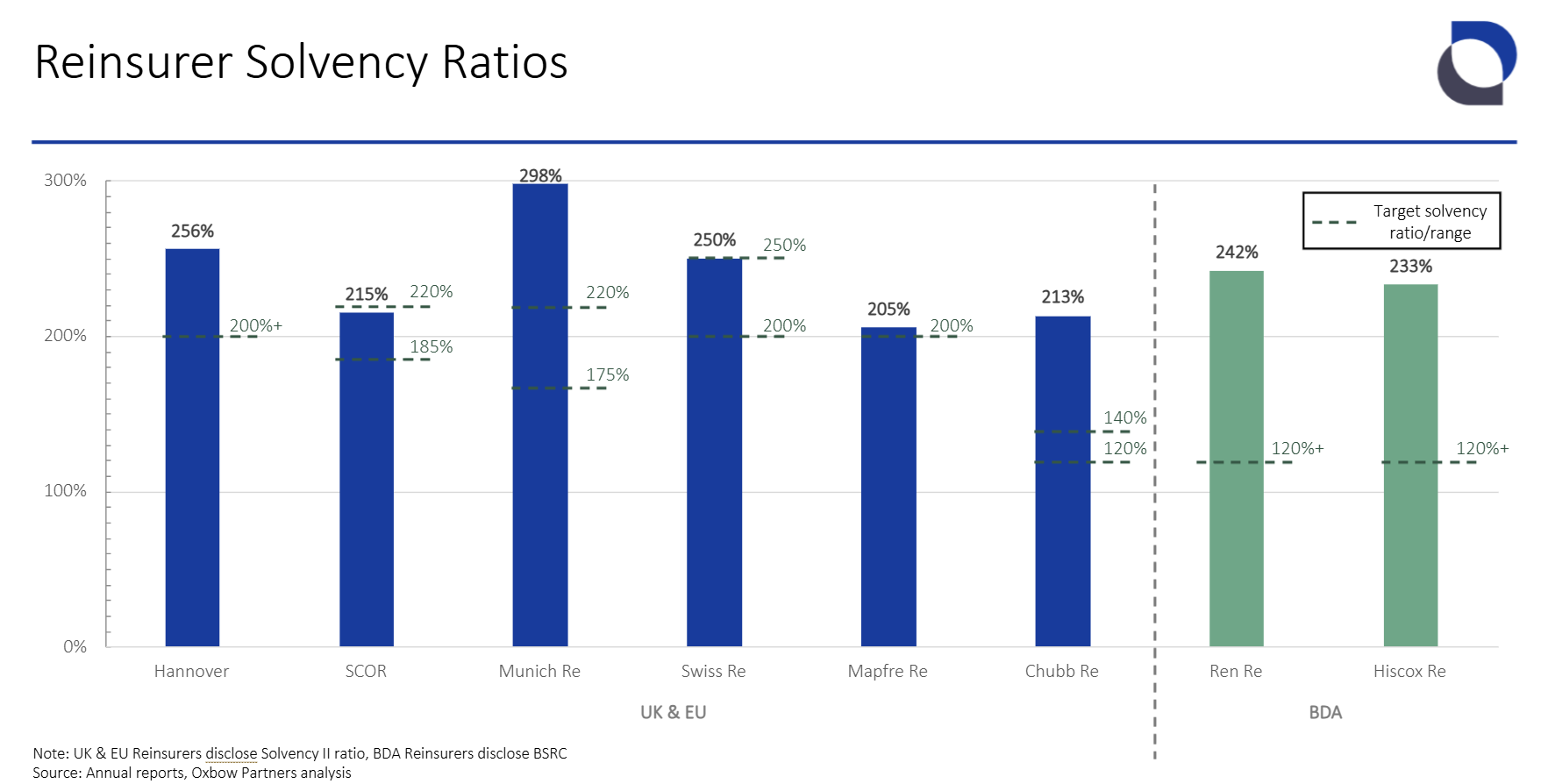
Despite $315bn of insured catastrophe losses between 2023 and 2025, reinsurers absorbed just $25bn, reflecting a shift from major perils to smaller but more frequent secondary perils. With strong profits in recent years reinsurers have built up large amounts of capital.
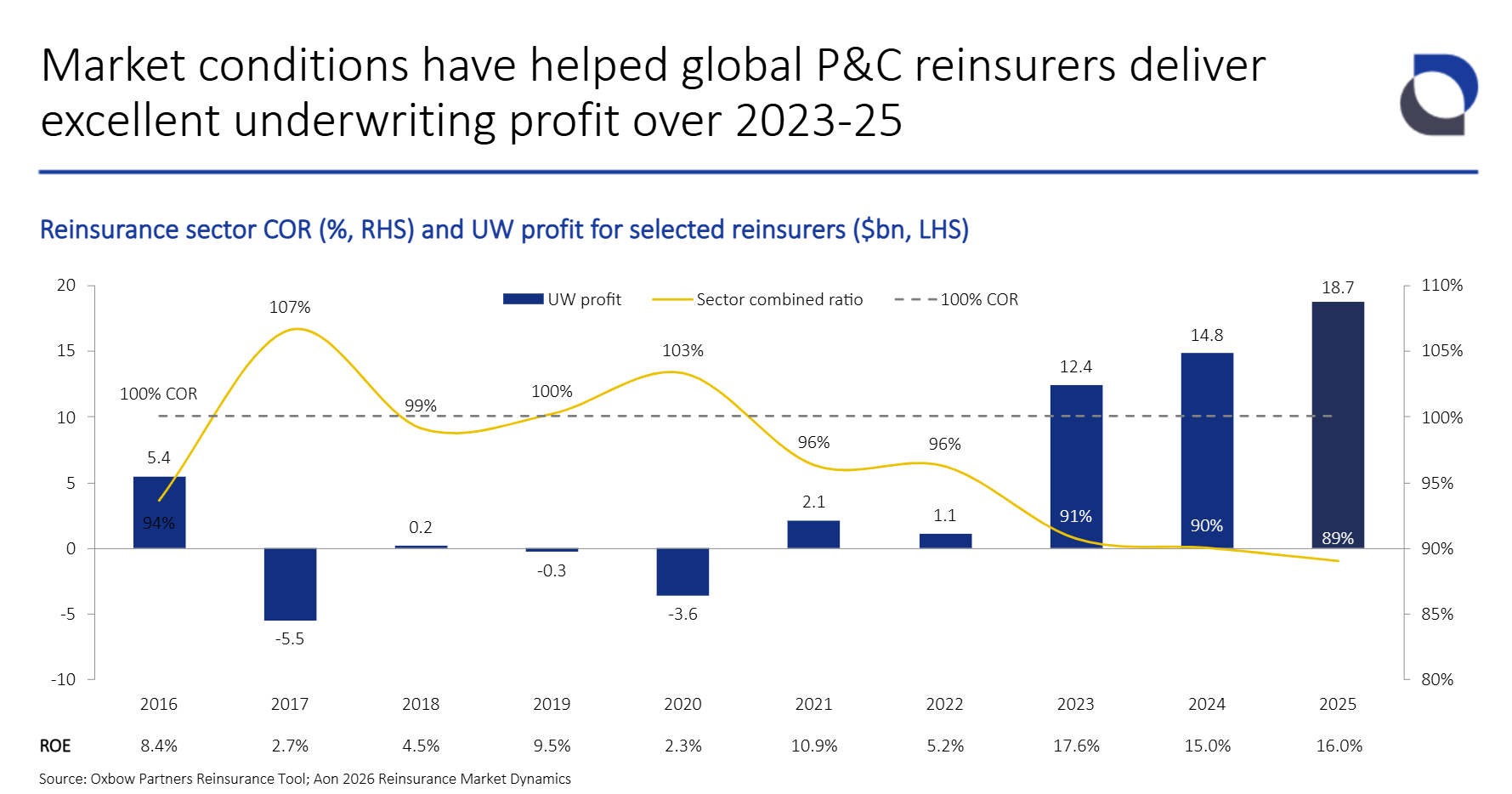
If no major hurricanes make landfall in the US for a second year in a row, reinsurers could see another year of excellent underwriting profits.
However, this is likely to exacerbate market softening. The question is, how should reinsurers react to ensure they stay ahead of the curve?
In our 2026 Reinsurance CEO Agenda, we outlined a number of priorities for reinsurers, some of which are reinforced by these climatic conditions. These included:
1. Build a nuanced ten-year strategy to drive through the next cycle
We argue that the reinsurance market is characterised by annual renewal cycles and it is tempting for companies to focus all their energy on the next renewal – particularly when rates are under significant pressure as they are this year. We observe that few reinsurers have developed a clear strategic ‘edge’. What matters is, therefore, not only how you trade but where you want to be at the peak of the next cycle, and how you get there.
Reinsurers have a unique opportunity to deploy capital for strategic purposes, either investing in their business to drive efficiency and scalability or making acquisitions to scale more quickly.
2. Prepare your executive decision-making for the soft market
As the market softens, decision-making becomes more complex. We argued that many management teams are seeing these market conditions for the first time as a collective.
Our question for executives is: are you prepared to navigate the new market cycle?
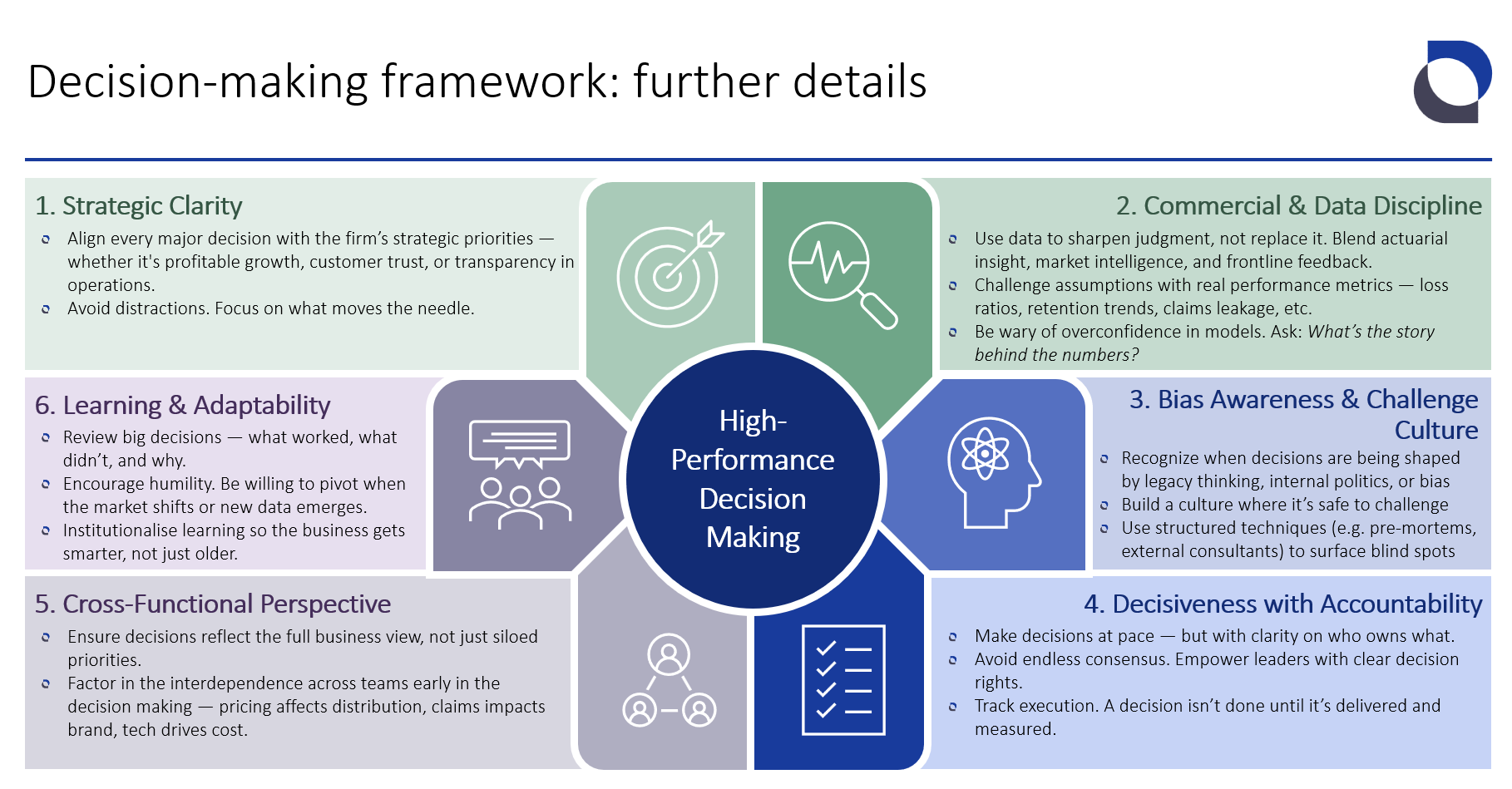
Through our work, we see that effective decision-making is underpinned by six factors: strong strategic alignment on growth and value, robust data-informed commercial judgement, awareness of bias and challenge to entrenched thinking, a cross-functional perspective, decisiveness with clear accountability, and a commitment to continuous learning and adaptability.
We see scenario planning and war gaming as important tools to prepare for future decisions.